

The Muse

Updated: Dec 17, 2024
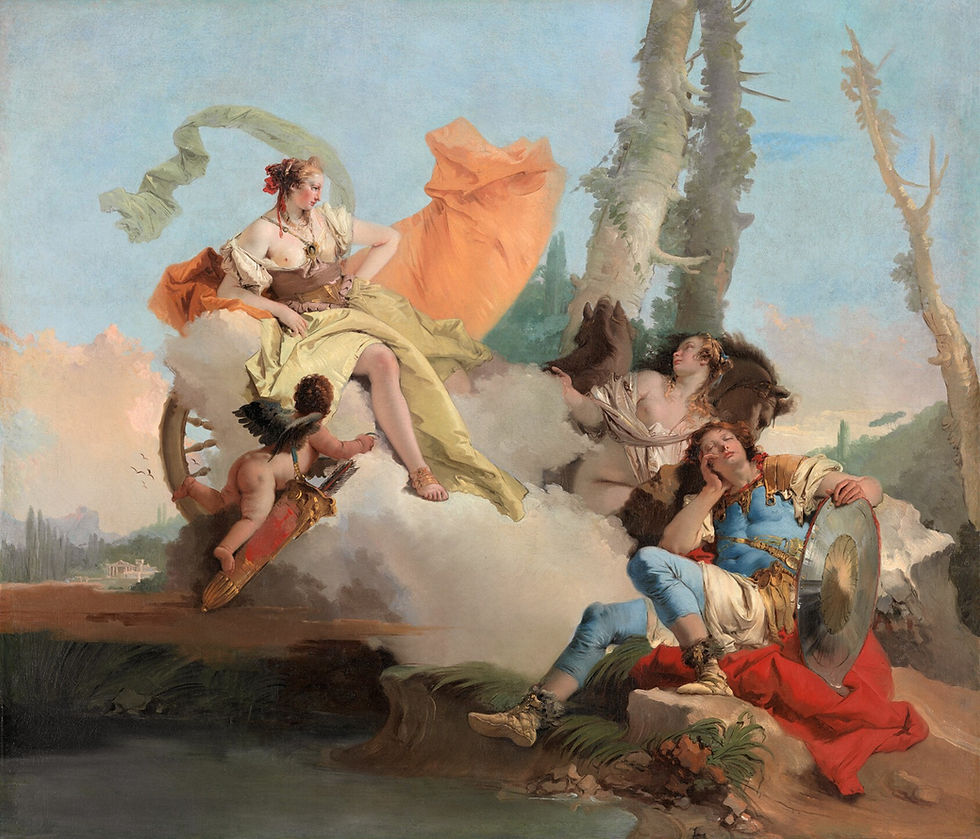
The word muse is a noun derived from the Latin root musa and the Greek root mousa. In
Greek and Roman mythology, the muses are the nine goddesses, the daughters of Zeus and
Mnemosyne, who preside over the arts and sciences. The muses are beautiful, they are
philosophers, poets, alluring. Often depicted dancing across a mountaintop, the muses are
otherworldly, magnetizing and seemingly detached or unaware of the world. To be a muse is to be art personified. One’s muse must capture the artist, whether it’s by their grandeur, their charisma, or lack thereof. A muse sticks out to someone. The thing about the muse is she often doesn’t know she is one and when she does, it’s all too late.
Traditionally muses are mythological beauties, inspiring the works of poets, philosophers,
and artists. Muses are the harbingers of great symbolism and creation, something beyond
themselves. Pablo Picasso famously admired his lover Marie-Thérèse Walter, a french model
with whom he shared a discreet affair. She’s portrayed as an idealized woman, with her signature blonde hair and curvaceous figure, accompanied by bold colors, contrasting her soft features. She was the subject of his art particularly during his Surrealist Era, cultivating pieces that look into the subconscious in experimental ways. Marie-Thérèse Walter was his great fascination.
Despite the grandeur of existing as art, the muse herself is hardly considered. The
admiration and art is only representative of the artist's perception, molds her into a symbol rather than a being. She is only an idealized version of the creator's eye, rarely seen for what she is.
We’ve all been the muse, the subject of displaced desire, merely a projected image.
Most creators scout the subjects of their art, their models. There’s a feature, a mannerism
that seems quirky or eyes coated in dark makeup that may not match. In the process of becoming one’s muse, there is a level of overt objection. We’ve seen this famously with Hollywood starlets and vintage models, such as Marylin Monroe and Edie Sedgwick. Their lives are marked by intense traumas, sexual, emotional, and substance abuse. Edie Sedgwick, Andy Warhol’s famous muse, exuded a certain conflicted sense of rebellion and purity. Her doe eyes, small figure, and eccentricity, made her not only glamorous, but also romanticized the profound recklessness of the 1960’s.
Being the foundation of many of Warhol’s most iconic works, she was merely a tool. Edie
spiraled into drug dependency, being heavily exploited. His avant-garde style and interest in taboos, Edie was vulnerable to the use of others, serving only as an embodiment of something desirable. Warhol’s production “Vinyl,” is wildly intimately, uncomfortably so. Sedgwick is seen at her most vulnerable, almost as if she isn’t playing a role. She’s the object of stardom, trapped in the haze of fame and addiction, completely detached from the world. Her suffering and detachment makes art while she walks down the past of destruction. In their final film Lupe in 1966, her character navigates the final hours of her life before she commits suicide with sleeping pills. She hauntingly died by a barbiturate overdose.
One’s “muse-hood” is marked by a romanticized sadness and abstract beauty. In the midst
of teenage angst, I found myself looking to muses, romanticizing sadness that felt a lot like my own despite my youth. I was thirteen, listening to Lana Del Rey, romanticizing my personal victimhood. In girlhood, I’ve found there is often an attempt to make our suffering beautiful, to fawn at the threat of pain, because perhaps it will feel good, even for a second. As I navigated my personal intensity, I listened to music that mirrored my experiences, even if I wasn’t cognizant of them. I scrolled through Tumblr, seeing a sad movie quote, an eating disorder post, and something overtly sexual. It was admittedly beyond my mental understanding and became a formative aspect of my reaction to pain. However, I understood the themes of suffering, hiding, and beauty.
These facets of my experiences became all-consuming, not only a feeling but a persona. I
found that I was fascinated by being the object of someone else's desire, being a muse. I
understood then that the muse isn’t real. I became enthralled by this identity of being beautiful and sad, something I think many girls became transfixed on. We see these muses through the lens of iconography, profound beauty, and sexual desire, all things we desire. They simultaneously are an image of sadness, embodying not only what we want to be, but what we are. The splendor of being one’s inspiration, being beautiful through pain. There is a certain validation in sadness making one desirable, affirming that their sadness is what they are. The beauty makes the suffering worth it, fulfilling the craving of being wanted.
Artists love the muse, their special, groomed, beauty. While the muse feels the fantasy of
being loved just for being themselves, the artist profits in more ways than one. The artist is so mesmerized by the muse seeing her only as that. She is the artist's lover but he is not her’s. Marie-Thérèse Walter was seventeen when she met Picasso, who was forty-five. She was portrayed as an innocent beauty while he juggles his marriage with her and his wife. Edie Sedgwick was twenty-one and Warhol was thirty-six when she became the subject of his
admiration and abuse. He romanticized Edie while he destroyed her, even in their final creation.
The concept of the muse, particularly as it pertains to women in art and culture, reveals a
troubling paradox: the muse is simultaneously elevated and dehumanized. While artists like
Picasso and Warhol glorified their muses, immortalizing them in their works, the very act of
objectifying and romanticizing them strips them of their autonomy. These women become
symbols of beauty, sadness, and desire—often in ways that served the artist’s own narrative, but rarely their own. The muse becomes a reflection of the artist's inner world, a tool for creation, but at the cost of their own voice, identity, and emotional well-being.
As we observe this pattern across history, it is clear that the muse is not just a passive
figure but a deeply complex person, whose suffering and beauty are commodified and consumed.
I’ve come to understand that the idealization of sadness and beauty is ultimately a form of
exploitation, and the muse, far from being immortalized, is often left lost in the shadows of the art she inspired. Beauty does not have to be pain.


Comments